Address:Room 906, building 6, SIIC Center, No.195 Hong Kong East Road, Laoshan District, Qingdao city, Shandong Province, China
E-mail:info@deltachem.net
Thermoplastic elastomer, abbreviated as TPE, is a kind of elastomer which has the elasticity of rubber at room temperature and can be plasticized at high temperature. Therefore, TPE has the physical and mechanical properties of vulcanized rubber and the processability of thermoplastic, which is a new type of polymer material between rubber and resin.
> What are the main types of TPE?
According to the differences in the chemical structure, TPE is mainly divided into the following 5 categories:
1. Styrene block copolymer (TPS)
SBS and SEBS as a representative of the molecular chain of the hard segments (polystyrene) and the soft segments (polybutadiene) are arranged in an alternating manner. These materials are widely used in the field of shoe materials and seals.
2. Polyolefin blending system (TPO)
Among them, TPO (polypropylene/EPDM rubber) and TPV (dynamic vulcanization type) constitute the main materials in the automotive industry.
3. Polyurethane elastomers (TPU)
TPU materials excel in the field of transmission belts and hydraulic seals by virtue of the strong polarity of the urethane groups.
4. Polyester-based elastomers (TPEE)
TPEE is widely used in the fields of automotive parts, hydraulic hoses, shoe materials, transmission belts and medical devices.
5. Polyamide-based materials (TPAE)
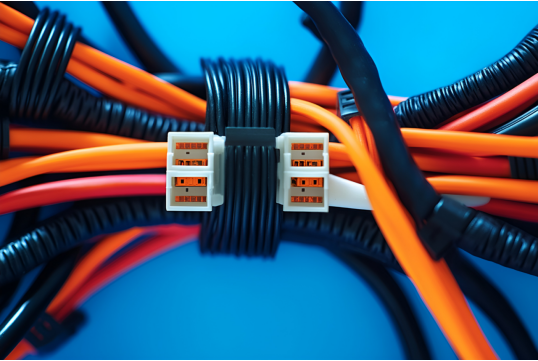
TPAE is irreplaceable in high-temperature wire harness protection sleeve applications, with a long-term use temperature of up to 170°C.
> What are the downstream applications of TPE?
1. Automotive industry
Seals and dust covers: TPE seals and dust covers are widely used in automobile bodies and engine compartments, effectively preventing dust, moisture and noise from entering the car, and enhancing the comfort and safety of the driving environment.
Pipes and hoses: TPE pipes and hoses are widely used in the automobile cooling system, fuel system and braking system, which require good corrosion resistance, high temperature resistance and low temperature resistance to ensure that they can work properly under various harsh environments.
Interior and exterior parts: TPE materials are also used in the manufacture of automotive interior and exterior parts, such as seats, door panels, instrument panels, etc.
2. The wire and cable industry
Insulation: TPE insulation can effectively prevent wire and cable in the transmission of electricity in the process of leakage and short-circuit phenomenon, to protect the safety and stability of power transmission
Sheath: TPE sheath to protect the wire and cable from external damage, such as wear and tear, corrosion and aging, etc. Third, the daily life of the wire and cable industry, Daily necessities manufacturing
3. Daily necessities manufacturing
kitchen supplies: TPE materials used in the manufacture of tableware, cookware handles and other kitchen supplies, can provide a better feel and non-slip performance, reduce the use of the process of slipping off and the risk of scalding
4. Medical equipment manufacturing
medical catheters and drainage tubes: TPE materials have excellent biocompatibility and corrosion resistance, can be very good to meet the requirements of the performance of the material of the medical catheters and drainage tubes Requirements
5. Manufacture of sporting goods
TPE materials are widely used in the manufacture of sporting goods, such as sports shoes, sports equipment, etc., because of its good elasticity, abrasion resistance and non-slip properties.
> How OMNISTAB Additives Deliver Color Durability & Cost Efficiency for TPE?
In the above mentioned applications , yellowing and cracking of TPE is a common problem. It is mainly caused by the following reasons:
1. The molecular structure of the material is unstable
TPE contains unsaturated double bonds (C=C), which are prone to oxidation reactions, and the oxidation produces chromophores, such as carbonyl groups, which leads to yellowing of the material.
2. Thermo-Oxygen Aging
Oxygen in the environment reacts with the molecular chains, leading to breakage or excessive cross-linking of TPE molecular chains. For example, seals in automobile engine compartments that are subjected to long-term heat.
3. Photo-Oxygen Aging
UV light triggers the photo-oxidative aging reaction that destroys the molecular chains. This problem is common in outdoor cables that are exposed to the sun for a long period of time.
Selecting and adding the right UV absorbers, HALS, and antioxidants is the most effective way to improve the long-term UV and weathering resistance of TPE. UV absorbers absorb the harmful UV light that causes photo-aging in TPE, HALS trap free radicals and decompose hydroperoxides, and antioxidants enhance the thermo-oxidative stability of polymer through chain termination. These additives work synergistically when used in combination.
>> OMNISTAB Solutions for High quality TPE
UV ABSORBER
OMNISTAB UV531
OMNISTAB UVP
OMNISTAB UV360
HALS
OMNISTAB LS622
OMNISTAB LS944
OMNISTAB LS119
OMNISTAB LS3346
ANTIOXIDANT
OMNISTAB AN565
OMNISTAB AN1425
OMNISTAB AO-80
OMNISTAB HN130