Address:Room 906, building 6, SIIC Center, No.195 Hong Kong East Road, Laoshan District, Qingdao city, Shandong Province, China
E-mail:info@deltachem.net
>> What is PPA?
Polyphthalamide (PPA ) is a semi-crystalline thermoplastic aromatic polyamide, commonly known as aromatic high-temperature nylon, with a long-term operating temperature of up to 180℃ and a short-term temperature resistance of up to 290℃. It has the advantages of high modulus, high hardness, high cost performance, low water absorption, dimensional stability and excellent weldability, etc.
>> What are the performance advantages of PPA?
PPA is a high temperature resistant material with a melting point between 310-325℃. It has an excellent resistance to oils and lubricants.
It has excellent oil resistance and excellent resistance to various oils such as fuel and lubricants.
PPA has excellent dimensional stability and low warpage.
PPA has excellent weather resistance and is suitable for long-term outdoor use conditions.
>> What are the main applications of PPA?
Automotive industry: Structural parts, thermostat shells, power pumps, clutch parts, oil pumps, etc.
Electronic and electrical industry: Connectors, circuit breakers, etc.
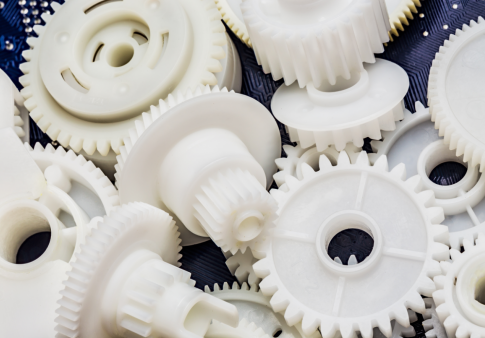
Mechanical industry: Water pump, oil pump parts, bearings, gears, etc.
>> How to protect High-Performance PPA from Light and Thermal Degradation? And how to further improve the properties?
By adding UV absorbers and light stabilizers, the UV resistance of PPA can be efficiently enhanced, and adding antioxidants can prevent PPA from thermo-oxidative aging and thus inhibit its degradation.
How do these additives work?
Triazine UV absorbers (e.g. UV1577, UV1164) are the preferred type of PPA due to their excellent thermal stability and absorption efficiency. HALS are highly effective in trapping reactive radicals (R-, RO-, ROO-) generated by the photo-oxidation of polymers, turning them into stabilized compounds with synergistic effects when used in conjunction with UV absorbers. Hindered phenolic antioxidants, such as AN1098 and AN1790, they deactivate the free radicals (R-, ROO-) generated by polymer oxidation by providing active hydrogen and combining with them. Auxiliary antioxidants decompose the hydroperoxides (ROOH) produced during oxidation, converting them to stable alcohol products.
UV absorber
OMNISTAB UV366
OMNISTAB UV1577
OMNISTAB UV1164
HALS
OMNISTAB LS3346
Antioxidant
OMNISTAB AN1098
OMNISTAB AN1790
OMNISTAB AN9128